The transformation of mobility will determine the future of our ecosystems
Climate change is a global problem. By 2050, a large proportion of the world’s population will be living on the African continent. The energy and transport systems being established today will therefore have a decisive impact on emissions in the coming decades.
If investments are made early on in sustainable and decentralised solutions, many African countries will have the opportunity not only to reduce their reliance on fossil fuels but, in some cases, to bypass this phase entirely. Sustainable development in Africa is therefore not merely a regional issue – it is of central importance for the global future.
The mobility sector will play a decisive role in this. As in many industrialised countries, it is one of the sectors with particularly high CO₂ emissions. Particularly in regions where transport, trade and fisheries are heavily dependent on water, the choice of propulsion technology has a direct impact on the environment, the economy and livelihoods.
Mobility on Lake Victoria
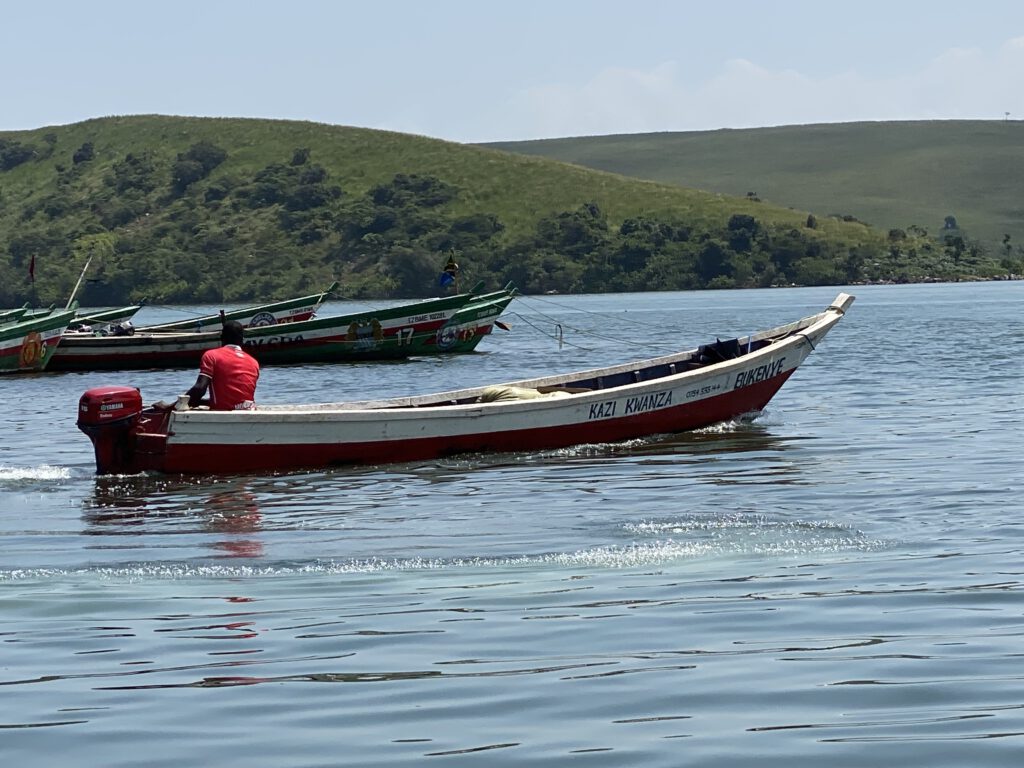
Lake Victoria is a case in point. Burning one litre of petrol produces around 2.4 kg of CO₂. An estimated 100,000 fishing boats operate on the lake, mostly powered by simple two-stroke petrol engines. Whilst these engines are cost-effective and widely used, they cause significant emissions, high operating costs and additional strain on the lake’s sensitive ecosystem.
This is precisely where our projects come in. Together with local partners, we are working to develop sustainable alternatives, ranging from electric boat propulsion and decentralised energy supply to new infrastructure and maintenance concepts.
New technologies open up sustainable alternatives
We have already achieved success in the practical implementation of electric outboard motors on Lake Victoria.
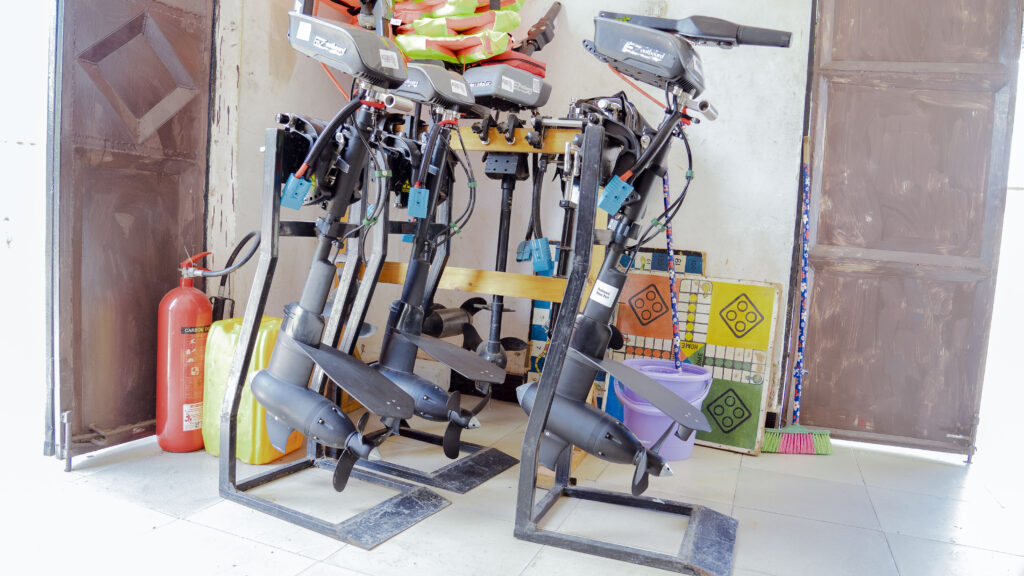
Together with our partners Golden Motor & ASOBO Mobility, we have developed an electric outboard motor specifically designed to meet the daily demands of fishing boats on Lake Victoria. The system combines an efficient electric motor with a 48-volt battery, offering a reliable alternative to traditional petrol engines.
Advantages:
- electric outboard motors for commercial fishing boats
- significantly lower maintenance requirements
- Quieter and lower-vibration operation
- 70% lower operating costs compared to conventional petrol engines
Combined with a renewable energy supply, we are making sustainable mobility a reality.
Most fishing boats on Africa’s Great Lakes and in coastal waters are still powered by petrol outboard motors. These motors are widely used, but present disadvantages in day-to-day operation. Rising fuel prices lead to high running costs and make operators heavily dependent on fossil fuels.
Typical challenges
- High and fluctuating fuel costs
- significant environmental impact
- Dependence on fossil fuels
Sustainable mobility with impact
For us, sustainable mobility means more than just new technologies. It should improve people’s lives, create economic opportunities and, at the same time, protect the environment and resources.
A particular focus of our work is on waterborne mobility. On lakes and rivers, boats are often the most important means of transport for fishermen, traders and entire communities. We are already implementing solutions that are affordable, reliable and environmentally friendly in the long term.
Our projects demonstrate how sustainable mobility works in practice, both on water and on land.
If you would like to find out more about our work in the field of sustainable mobility, discover a selection of our current projects and technologies here.